
Common Heart Tests Explained: ECG, Echo, TMT & CT Angiography
Knowledge is your most powerful ally for safeguarding your cardiovascular health. The human heart is a remarkably resilient organ, but it can also be incredibly complex. When symptoms like chest pain, shortness of breath, dizziness, or palpitations arise, our specialists rely on specialized diagnostic tools to see what is happening beneath the chest wall.
Understanding these common heart tests can demystify your next clinic visit, alleviate anxiety, and empower you to take charge of your wellness. From standard routine screenings to advanced imaging, here is an in-depth guide to the most frequently prescribed types of cardiovascular tests: the Electrocardiogram (ECG), Echocardiogram (Echo), Treadmill Test (TMT), and CT Angiography.
Electrocardiogram (ECG or EKG)
The Electrocardiogram is the most fundamental and widely used heart test in modern medicine. It is a quick, non-invasive, and completely painless procedure that records the electrical signals in your heart.
How It Works
Small sticky patches called electrodes are placed on your chest, arms, and legs. These electrodes are connected to an ECG machine, which detects and graphs your heart’s electrical activity as waves on paper or a digital screen.
What It Detects
An ECG tells our specialists how fast your heart is beating and whether its rhythm is steady or irregular (arrhythmia). It can also show evidence of a prior heart attack or indicate an ongoing one by identifying areas of the heart muscle deprived of oxygen.
An ECG is often used as a baseline screening during annual checkups, or immediately if you present with symptoms like sudden chest pain or palpitations.
Echocardiogram (Echo)
While an ECG examines the electrical system of the heart, an Echocardiogram focuses on its physical structure and mechanical function. Think of an Echo as an ultrasound specifically designed for your heart.
How It Works
A technician applies a cool gel to your chest and moves a wand-like device called a transducer over the area. The transducer sends high-frequency sound waves into your chest, which bounce off your heart’s chambers and valves to create real-time, moving images on a monitor.
What It Detects
The Echo allows cardiologists to evaluate the size of your heart, the thickness of its walls, and how efficiently it pumps blood (known as the ejection fraction). It is also the gold standard for checking the function of your heart valves, ensuring they open and close properly without leaking.
When It’s Needed
An Echo is crucial if our specialists suspect heart failure, valve disease, congenital heart defects, or if they heard an abnormal sound (heart murmur) during a physical exam.
Treadmill Test (TMT) / Cardiac Stress Test
A heart at rest might behave perfectly normally, but problems can sometimes only surface when the heart is pumping hard during physical exertion. This is where a stress test and ECG combination, most commonly known as the Treadmill Test (TMT), comes into play.
How It Works
You will be connected to an ECG machine and a blood pressure monitor while you walk on a treadmill. Every few minutes, the treadmill speed and incline are increased to make your heart work harder. The test continues until your heart rate reaches a target goal, or until you experience symptoms like fatigue, shortness of breath, or chest discomfort.
What It Detects
TMT is one of the primary types of cardiac stress tests used to diagnose coronary artery disease (CAD). By monitoring your heart’s electrical activity and blood pressure during stress, our specialists can determine whether your coronary arteries are delivering enough oxygen-rich blood to the heart muscle during exercise.
When It’s Needed
Our specialists may recommend a TMT if you have risk factors for heart disease and experience chest pain or shortness of breath when exercising, or to evaluate the effectiveness of an ongoing cardiac treatment plan.
Coronary CT Angiography (CTA)
For a highly detailed, non-invasive look inside the coronary arteries that supply blood to your heart, our specialists rely on a Coronary Computed Tomography Angiography (CT Angiography).
How It Works
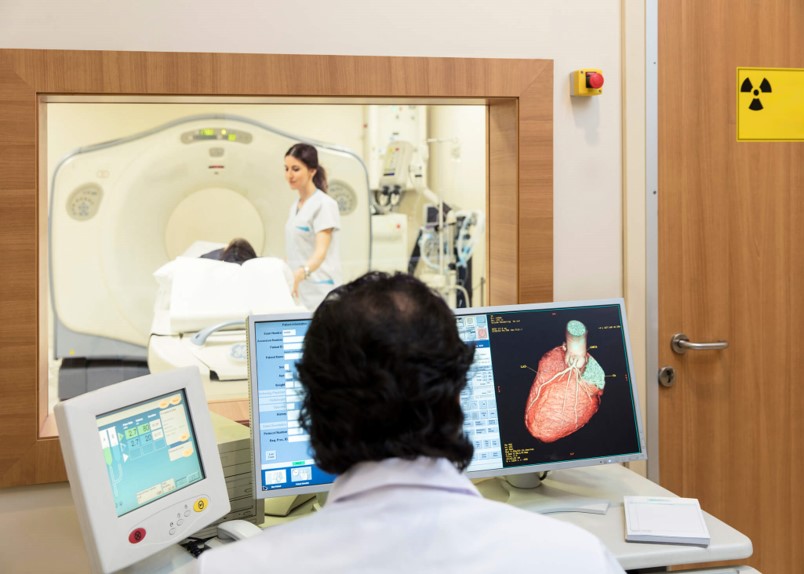
Before the scan begins, an iodine-based contrast dye is injected through an IV in your arm to make your blood vessels clearly visible. You then lie on a motorized table that slides into a doughnut-shaped CT scanner. The scanner takes multiple high-resolution, X-ray images from different angles, which a computer compiles into a detailed 3D model of your heart.
What It Detects
CT Angiography is exceptionally accurate at detecting plaque buildup, calcium deposits, and narrowing or blockages in the coronary arteries. It can identify early-stage coronary artery disease long before a patient experiences physical symptoms.
When It’s Needed
This test is highly beneficial for patients with an intermediate risk of heart disease, atypical chest pain, or inconclusive results from a previous stress test and ECG.
Choosing the Right Cardiac Test
Selecting the appropriate diagnostic tool depends primarily on your presenting symptoms, risk factors, and what we aim to evaluate. We consider the following:
- Baseline Screening – An ECG/EKG is the standard first step to quickly assess electrical activity.
- Shortness of Breath – An Echocardiogram is ideal to visualize the physical structure and pumping efficiency of the heart.
- Chest Pain Triggered by Exertion – A TMT helps determine how your heart handles increased workloads and if physical stress induces oxygen deprivation.
- High-Risk Patients – A CT Angiography offers the most definitive, non-invasive look at actual arterial blockages.
Take Control of Your Cardiovascular Health
Your heart works tirelessly every second of the day, and keeping it healthy requires proactive care. CardioNow performs advanced diagnostic evaluations like these for common heart conditions to prevent, intervene early, and gain peace of mind. Whether you are experiencing mild symptoms, managing a diagnosed condition, or simply want to assess your cardiovascular risks, seeking professional medical guidance is the most important step you can take. Schedule a comprehensive heart screening with our expert cardiology team today.
