
FAQs About Cardiac Stress Tests
Key Questions About Cardiac Stress Tests
Your doctor just recommended a heart evaluation. Stepping into a clinic for the first time often brings up a rush of questions. What is a cardiac stress test? CardioNow’s guide will help you prepare for a stress test. We understand that medical jargon feels overwhelming, so we want to break down the process into simple steps. Once you know a little bit more about stress tests, you can arrive at your appointment calm, prepared, and informed.
The Basics of Stress Tests
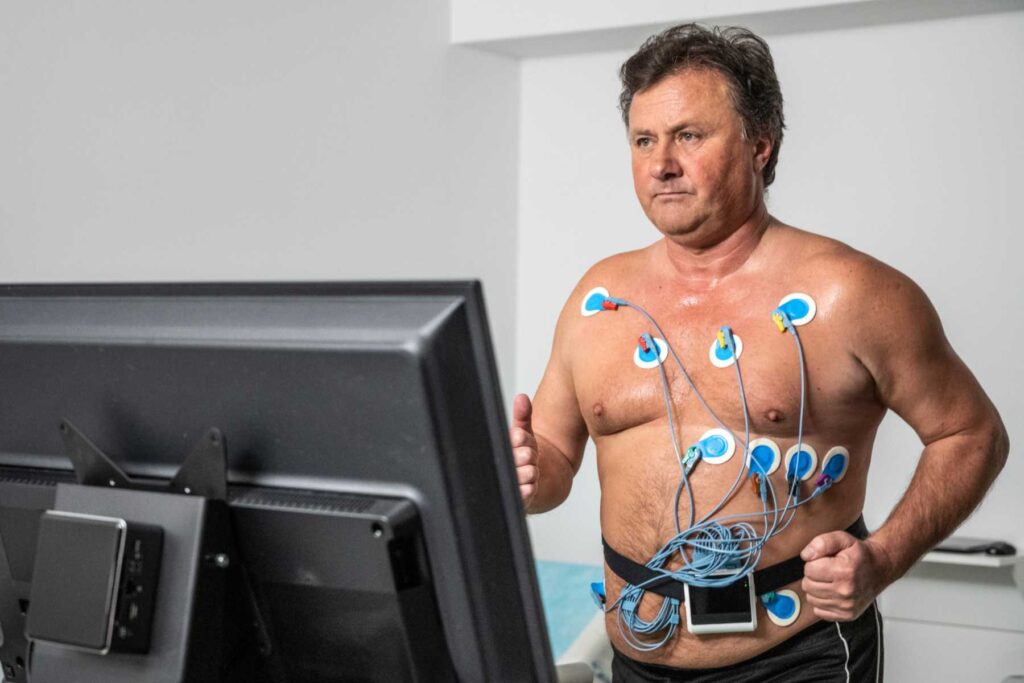
You might ask yourself, “What is a cardiac stress test and why do doctors rely on it so heavily?” This form of cardiac testing measures how your heart performs under physical pressure. When you exert yourself, your body requires more oxygen, forcing your heart to pump harder. Doctors monitor your blood pressure and electrical rhythms to spot any irregularities that remain hidden while you rest. Finding these hidden issues can help doctors diagnose issues that may not otherwise be visible.
Types of Cardiac Stress Tests
Every patient walks into our practice with a unique medical history, so we rely on several different evaluation methods to get the most accurate picture. Depending on your current physical condition, medical history, and specific symptoms, our cardiologists will select the safest and most effective approach. Choosing the right method ensures we gather precise data without putting you in unnecessary discomfort. We prioritize your well-being by tailoring the examination specifically to your body and physical capabilities.
Treadmill Stress Test
A treadmill stress test stands as the most common method we use to evaluate cardiovascular endurance. You simply walk on a moving belt while connected to an electrocardiogram machine that tracks your electrical heart signals. The technician gradually increases the speed and incline to simulate walking up a small hill. If you feel tired or experience chest discomfort, we will stop the machine immediately to ensure your total physical safety.
Chemical Stress Test
Not everyone can physically walk or pedal, which is precisely why a chemical stress test exists. We administer a specific medication through an intravenous line that mimics the effects of exercise by dilating your blood vessels. Your heart rate might increase, and you might feel a warm flushing sensation, similar to how you feel after a brisk walk. This pharmacological approach allows us to gather vital diagnostic information for patients with limited mobility.
Stress Test With Diagnostic Imaging
Sometimes we need a more detailed visual perspective, prompting us to perform a stress test with imaging. By using an echocardiogram or nuclear scans, we capture detailed images of your heart muscle before and immediately after physical exertion. These detailed images reveal specific areas of the muscle that suffer from poor blood flow. Seeing the actual structure and movement helps our specialists pinpoint blockages that standard electrical monitoring might easily miss.
The main types of diagnostic heart stress imaging include:
- Stress Echocardiogram (Stress Echo): Uses ultrasound (sound waves) to create moving images of the heart’s chambers, valves, and walls. It compares images taken at rest with those taken immediately after exercise (treadmill/bike) or after receiving medication that increases the heart rate (e.g., dobutamine). It identifies areas of the heart that are not contracting properly due to lack of blood flow.
- Nuclear Stress Test (Myocardial Perfusion Imaging – MPI): Uses a small amount of radioactive tracer, injected during peak stress, to map blood flow to the heart muscle.
- SPECT (Single Photon Emission Computed Tomography): Creates 3D images of the heart at rest and after stress to identify “cold spots” or damaged areas with poor blood flow.
- PET (Positron Emission Tomography): Provides higher resolution images than SPECT, offers better accuracy in obese patients, and can precisely identify the location and severity of perfusion defects.
- Stress Cardiac MRI: Uses powerful magnets and radio waves (no radiation) to create detailed images of the heart. It can evaluate blood flow (perfusion), detect areas of scar tissue (viability), and assess heart structure.
Why Is Stress Testing Important
Patients often wonder why stress testing is important when they have already had a standard resting electrocardiogram. The answer lies in the dynamic nature of coronary artery disease, which frequently shows zero symptoms when you sit still. Pushing the heart to work harder exposes narrowed arteries and restricted blood flow that only trigger pain during physical activity. Identifying these blockages before they cause a severe cardiac event drastically improves the success rate of preventive treatments.
What to Expect During a Stress Test
Knowing what to expect from a stress test can help ease anxiety before your appointment. When you arrive, a technician will greet you and place small adhesive electrode patches on your chest. These painless sensors connect directly to our monitoring equipment that record your heart’s activity while you’re at rest sitting comfortably, establishing a baseline reading. You’ll then begin the exercise portion walking on a treadmill while your heart rate, blood pressure, and symptoms are closely monitored. Once the exercise portion is complete, you’ll rest for a few minutes while we continue monitoring your heart as it safely returns to its normal resting rate.
Schedule a Test at CardioNow
Taking proactive steps to evaluate your cardiovascular health empowers you to live a longer, more active life. Identifying hidden arterial blockages early gives you the best chance to intervene with medication or lifestyle changes. Our dedicated team in the greater Seattle area wants to support your journey toward optimal wellness. Reach out to our friendly staff today to book your evaluation, and let us provide the advanced cardiac testing you deserve.
