
What Is Vein Ablation & How Does It Work?
Understanding Vein Ablation and How it Works
CardioNow restores comfort and confidence to patients with vein ablation procedures in and around the Seattle area. You might look at your legs and see twisting, bulging lines beneath your skin, which make your legs feel heavy, achy, and tired by the end of the day. Many people live with this discomfort for years, thinking it’s a natural part of aging. However, you have options for quick and minimally invasive treatments. One of the most common and successful solutions is a vein ablation procedure. But what is it, and how does it work? Learn more about leg vein ablation below.
What Causes Varicose Veins?
Veins work constantly to return blood from the legs to the heart, fighting gravity every step of the way. When this system fails, circulation slows, and visible, painful problems appear in the legs. Here’s an overview of the process that causes varicose veins:
- One-Way Valves—Healthy leg veins contain tiny valves that open upward and close tightly after each heartbeat. They prevent blood from slipping backward and pooling under gravity.
- Valve Failure—Weak or damaged valves cannot seal properly, allowing blood to leak backward into the vein. Doctors call this ongoing circulation problem venous insufficiency.
- Visible and Physical Symptoms—Rising pressure stretches vein walls, making them twisted, enlarged, and visible. Some also feel swelling, burning, throbbing, heaviness, or leg cramps.
- Progression and Care—Venous insufficiency usually worsens over time and rarely improves without medical care. Leg vein ablation corrects blood flow and helps relieve symptoms.
What Does the Vein Ablation Procedure Look Like?
Vein ablation is a modern, minimally invasive treatment designed to fix faulty veins at their source. By closing the problem vein, it restores healthier blood flow and relieves uncomfortable symptoms. Here’s what you need to know about the vein ablation procedure:
- What Ablation Means—Ablation refers to closing or destroying tissue in a controlled medical way. In vein care, doctors use heat-based energy to seal a diseased vein from the inside.
- How the Vein Closes—Thermal energy damages the vein wall, causing it to collapse and shut down. Over time, the vein turns into scar tissue that the body naturally absorbs.
- Redirecting Blood Flow—Once closed, the vein no longer carries blood, which may sound concerning at first. Your body naturally reroutes blood through nearby healthy veins with properly functioning valves.
- Symptom Relief—Eliminating backward blood flow lowers pressure inside the leg veins. As pressure drops, bulging veins shrink and pain, heaviness, and swelling begin to fade.
How to Prepare for Endovenous Ablation Treatment
Proper preparation helps ensure that your endovenous ablation, a type of vein ablation, treatment is successful. Taking the following steps before your appointment allows your medical team to tailor the procedure to your needs:
- Initial Consultation—Your journey starts with a detailed discussion of your medical history. Mention recent illnesses, chronic conditions, and any allergies, especially to anesthetics or latex.
- Medication Review—Your doctor will carefully review all medications you take, including prescriptions, over-the-counter drugs, and supplements.
- Adjusting Blood Thinners—Some medications affect blood clotting and may need to be paused temporarily. Avoiding blood thinners, aspirin, and NSAIDs reduces bruising and bleeding risks.
- Day of Procedure—Wear loose, comfortable clothing so you can relax. Most patients can drive themselves, but confirm transportation plans with your provider in advance.
What to Expect During Vein Ablation
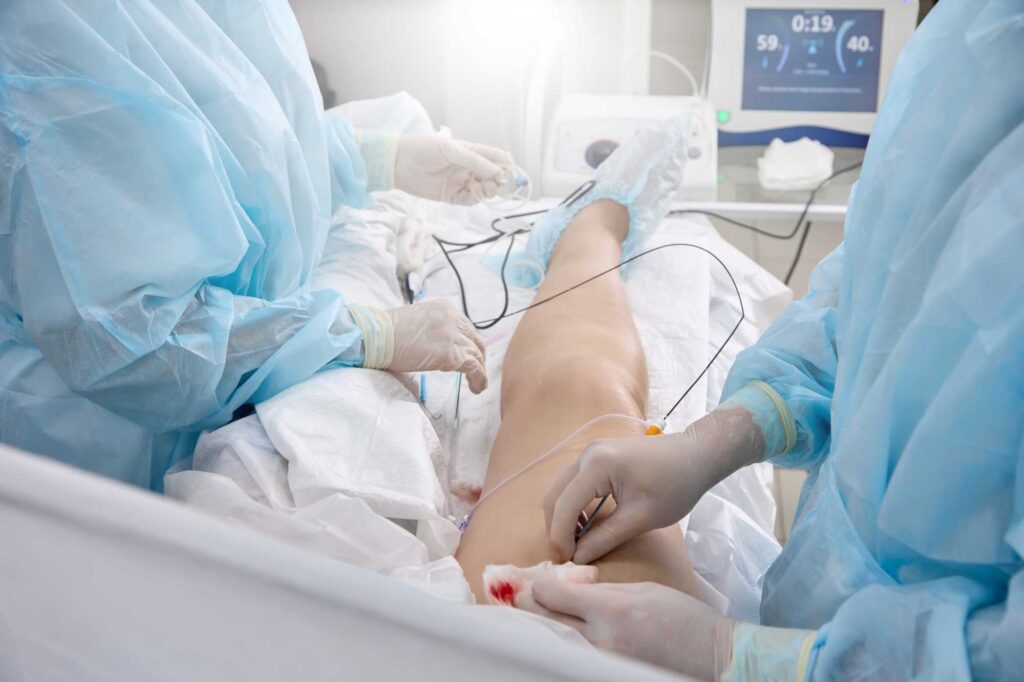
Endovenous ablation treatment is a quick, in-office procedure. Advanced imaging and minimally invasive tools allow doctors to treat vein disease efficiently. Here’s what to expect during the procedure:
- Ultrasound Imaging—You relax on a treatment table while your leg gets cleaned and sterilized. Ultrasound imaging helps the doctor clearly see the damaged vein beneath the skin.
- Numbing the Area—The doctor injects a local anesthetic to numb the treatment site. You may feel a brief pinch, but the procedure is usually pain-free afterward.
- Catheter Placement—Once numb, the doctor inserts a thin catheter into the affected vein. Ultrasound guidance ensures accurate positioning along the diseased section.
- Closing the Vein—Heat energy from radiofrequency or laser seals the vein as the doctor withdraws the catheter. The procedure takes less than an hour and requires a small bandage.
Advantages of Venous Ablation in Legs
Modern vein treatment offers clear advantages over traditional surgical approaches and outdated methods. Here are the main advantages of the vein ablation procedure:
- Minimally Invasive—The procedure is minimally invasive and avoids general anesthesia risks. It’s performed comfortably in our practice, not at a hospital operating room.
- High Safety and Success—Complications are rare, and vein closure rates are consistently very high. This reliability makes the treatment a trusted alternative to older, more invasive surgery.
- Superior Cosmetic Results—Tiny punctures heal quickly, leaving little to no visible scarring. Unlike vein stripping, recovery is gentle and far less traumatic.
- Faster Relief and Recovery—Patients experience less pain, bruising, and downtime after treatment. Symptoms fade, mobility returns, and overall quality of life improves quickly.
Recovering From the Vein Ablation Procedure
Recovery after this procedure is typically quick and easy, allowing patients to return to daily life with minimal disruption. Here’s an overview of life after the leg vein ablation procedure:
- Immediate Mobility—Most patients walk out of the office right after the appointment. Walking can help boost circulation and support healing.
- Compression Support—Compression stockings help apply gentle, steady pressure. They reduce bruising and help keep the treated vein closed during recovery.
- Quick Return to Routine—Normal activities and work often resume the next day. Briefly avoid strenuous exercise, heavy lifting, and hot baths, as your doctor advises.
- Mild Symptoms and Follow-Up—Minor bruising or tightness is normal. You can easily manage it with over-the-counter pain relief. Ultrasound follow-ups confirm success.
Trust Our Team for Leg Vein Ablation
Finding the right team makes all the difference for your leg vein ablation procedure in and around the Seattle area. Trusted and expert CardioNow specialists understand the intricacies of the vascular system. Our team offers decades of combined experience, delivering personalized care for patients of all ages. We use the latest technology to ensure optimal results, prioritizing your comfort and long-term health. So, don’t let varicose veins limit your life any longer. If you’re ready to experience world-class care and find relief from leg pain, contact us today to schedule your consultation.
